English
 中文简体
中文简体
 русский
 Español

Direct Conclusion: Extruded aluminum curtain rail systems offer superior structural stability, load-bearing capability, smooth operation, and integration versatility compared to traditional decorative curtain rods or PVC track alternatives. While decorative rods serve light-to-medium decorative drapes with visible hardware aesthetics, heavy-duty aluminum curtain rail systems excel in architectural concealment, supporting floor-to-ceiling drapery weighing up to 50 kilograms per linear meter, automated smart home motorized integration, and seamless wall-to-wall or curved bay installation.
Architectural drapery design requires balancing visual aesthetic goals with precise mechanical load dynamics. The selection of hardware determines not only how smoothly textiles traverse vast glazing expanses, but also how structurally sound the installation remains over decades of daily cycle friction. High-performance interior design relies heavily on selecting the correct curtain rail profile, material composition, and mounting configuration tailored to specific textile weights and spatial layouts.
Architectural Systems Comparison: Curtain Rail vs. Decorative Curtain Rod vs. PVC Channel
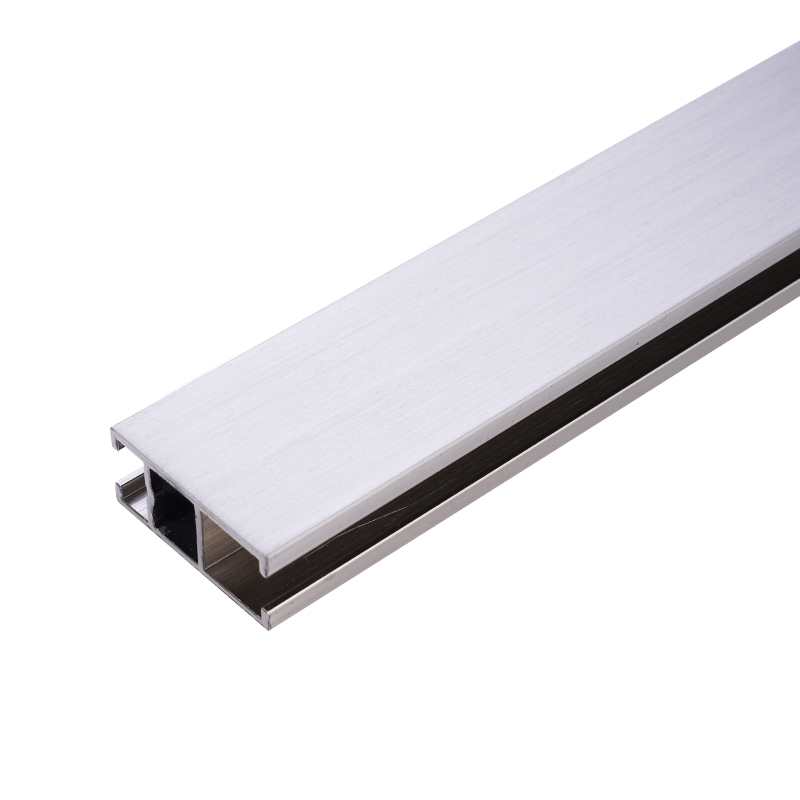
To determine the ideal mounting medium for residential or commercial projects, hardware classes must be compared across key physical metrics. A precision-engineered aluminum curtain rail utilizes enclosed internal glide channels, contrasting with open-top round rods that rely on external rings sliding over exposed metal tubes.
| Evaluation Metric | Architectural Aluminum Curtain Rail | Decorative Metal Curtain Rod | PVC Plastic Track Channel |
| Maximum Load Capacity | Exceptional: Supports 30 kg to 50 kg per linear meter depending on wall bracket spacing and extrusion wall thickness (minimum 1.8 mm). | Moderate: Supports 10 kg to 18 kg per meter before center sagging occurs on spans exceeding 2.4 meters without intermediate supports. | Low: Supports 3 kg to 6 kg per meter. Susceptible to longitudinal flexing and channel warping under heavy velvet or thermal linings. |
| Glide Friction Coefficient | Ultra-Low: Internal lubricated nylon or wheel-bearing gliders yield a friction coefficient as low as 0.05, enabling effortless hand or motorized operation. | Variable/High: Metal ring-on-rod friction creates acoustic noise and higher resistance, requiring up to 3x more pulling force per drape. | Moderate: Smooth initially, but develops surface micro-grooves over time under heavy use, increasing pulling resistance. |
| Bending & Corner Fabrication | Precision Engineered: Factory or field-bendable to exact radii (as tight as 100 mm) for continuous 90-degree corners, bay windows, or continuous curves. | Restricted: Requires specialized corner elbow joints that interrupt smooth ring travel, causing friction hitches at turn points. | Flexible/Unstable: Highly flexible for manual bending, but lacks rigid structural resistance, causing droops along tight radii. |
| Aesthetic Integration | Concealed/Flush: Flush-mounted into ceiling plasterboard channels or hidden inside architectural light coves for invisible ceiling-to-floor drape suspension. | Prominent Exterior: Designed to remain fully visible; hardware finials and brackets dictate the decorative tone of the window frame. | Utility Appearance: Industrial appearance requiring external wooden or fabric valances to hide hardware components from sight. |
| Motorization Compatibility | Native Integration: Engineered with internal drive belts to accommodate concealed smart home tubular motors and continuous automated track cycles. | External/Bulky: Requires secondary external add-on robot drivers or exposed motorized draw belts that compromise sleek visual profiles. | Incompatible: Insufficient structural rigidity to handle motor torque and rapid startup/stop forces. |
Material Integrity and Metallurgical Specifications
The durability of a curtain rail system relies on material selection and profile cross-section geometry. Commercial and luxury residential developments demand metals that resist structural deformation under dynamic tension, atmospheric oxidation, and continuous friction.
6063-T5 Extruded Aluminum Alloys
The global benchmark for heavy-duty curtain rail profiles. T5 heat treatment increases tensile strength to approximately 180 MPa, preventing track sag across spans up to 6 meters without requiring extra mid-support brackets that block glider travel.
Anodized & Electrophoretic Finishes
Protective surface coatings measuring 12 to 25 microns thick prevent metal oxidation, salt air corrosion in coastal estates, and surface flaking. Smooth anodized internal channels maintain silent glider movement over thousands of cycles.
Polyoxymethylene (POM) Wheel Carriers
Precision-molded POM roller gliders with stainless steel axles minimize resistance. POM offers high dimensional stability and abrasion resistance, ensuring smooth curtain travel across long track spans.
Lab stress tests indicate that a 2.0 mm wall thickness 6063-T5 aluminum curtain rail profile exhibits less than 1.2 mm of vertical deflection under a 40 kg static central load across a 3-meter unsupported span. In contrast, standard 1.0 mm steel rods flex up to 14.5 mm under identical conditions, causing gliders to jam in the center of the span.
Architectural Integration in Luxury Living Spaces
High-end architectural designs prioritize clean ceiling lines, floor-to-ceiling glass expanses, and subtle hardware integration. Selecting the correct curtain rail mounting methodology allows designers to control light leakage, acoustic reflection, and visual spatial proportions.
- Recessed Ceiling Track Channels: Flanged aluminum tracks installed flush into plasterboard ceilings create the visual effect of drapery descending directly out of the architecture, eliminating visible gap light leakage at the top header.
- Multi-Channel Stack Configurations: Double and triple curtain rail channels organized within a single slim extrusion allow simultaneous movement of delicate sheer drapes, dense acoustic blackout linings, and decorative side panels within a compact 100 mm depth pocket.
- Wave-Fold Drapery Systems: Integrated master carriers combined with internal corded gliders create uniform S-wave fabric folds at precise 60 mm or 80 mm intervals, preventing drape flattening and maintaining clean vertical lines.
- Acoustic Isolation Mounts: Neoprene dampening gaskets positioned between ceiling brackets and the structural slab attenuate motor resonance and glider friction noise by up to 18 dB, essential for quiet hotel suites and luxury bedrooms.
Automated Smart Control and Motorized Track Performance
Integrating a motorized curtain rail into building management systems (BMS) or smart home hubs requires analyzing motor torque, power options, and drive belt materials. Automated track systems use internal high-tensile steel-reinforced timing belts driven by quiet brushless DC motors.
Operational data demonstrates that motorized curtain rail installations operate at noise levels below 35 dB when utilizing rubber-coated timing belts and encapsulated acoustic motor housings. A motor with a 1.2 Nm torque rating can effortlessly drive a continuous 60 kg drapery run across a 10-meter double-curve curtain rail at adjustable travel speeds between 10 cm and 20 cm per second. Built-in soft-start and soft-stop electronic limiters extend fabric life by reducing sudden mechanical tension on heading tapes and seam stitches.