English
 中文简体
中文简体
 русский
 Español

Achieving seamless drapery movement across expansive spans, complex architectural angles, or multi-sided bay windows requires high-precision curtain rods connectors to bridge separate hardware segments into a cohesive system. Standard drapery poles are constrained by fixed manufacturing lengths, usually capping out at 8 to 10 feet to avoid shipping complications and structural bowing. By utilizing specialized straight, adjustable, or hinged corner corner connectors, interior installers can bypass these physical limitations, preserving both structural load capacity and smooth glide paths for drapery rings or grommets.
The integration of connector hardware is essential for maintaining mechanical integrity where two distinct poles meet. Without a structural connector, a spliced joint becomes a primary point of mechanical failure, warping under the downward load of heavy fabrics or catching the inner rims of moving eyelet rings. Selecting the correct connector format transforms disjointed pieces of metal or wood into an engineered support structure capable of managing intense shear force and complex room geometries.
Mechanical Classifications of Curtain Rod Joining Hardware
Not all drapery configurations present identical structural demands. Distinct window shapes and physical spans require specific mechanical connector profiles, each designed to balance load-bearing capabilities with ease of transition.
Internal Straight Splice Joists
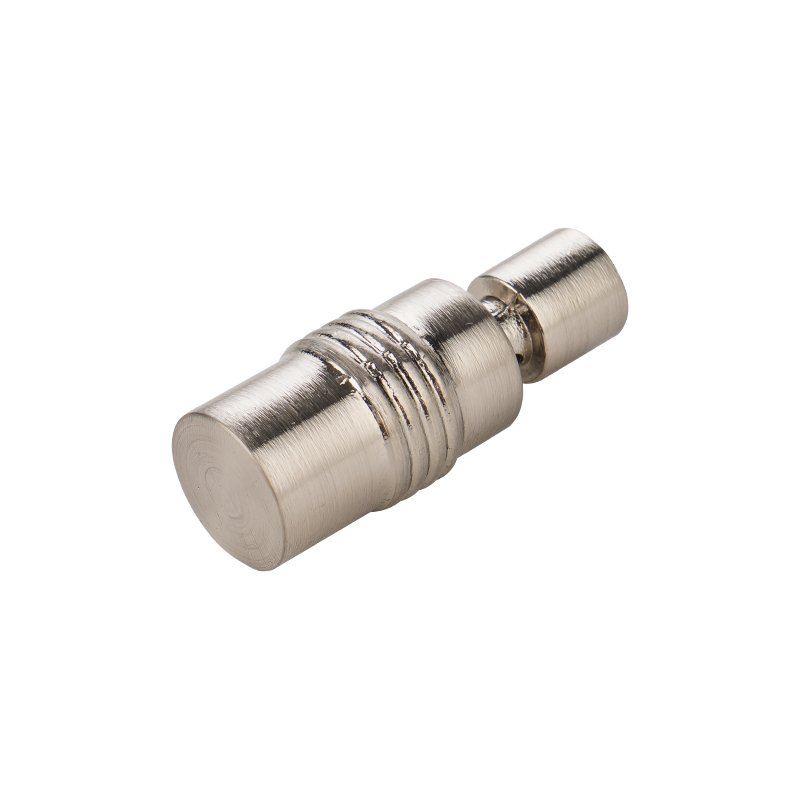
Straight inline connectors are cylindrical inserts manufactured to slide tightly inside the hollow cores of metal poles. They typically feature an outer center ridge or a spring-loaded retention clip that centers the connector perfectly at the seam line. Because they sit completely flush inside the tubing, they create an unbroken, seamless surface over which drapery rings can travel without snagging, which is essential for massive modern wall-to-wall glass installations.
Hinged and Swivel Corner Elbows
Designed for angular architectural features like corner windows and bay projections, hinged connectors feature a central mechanical pivot screw. This adjustable knuckle allows the connector to bend freely, accommodating angles ranging from 90 degrees to 180 degrees with precise adaptation. Once the matching angle of the window casing is matched, an internal set screw is tightened to lock the hinge firmly into position, creating a rigid corner transition.
External Screw-In Sleeve Couplers
Primarily utilized for solid wooden drapery poles, external sleeve couplers consist of a dual-threaded steel dowel screw or an external metal collar that encompasses the outer perimeter of the wood rod. This method provides the required tension resistance to prevent heavy solid timber poles from pulling apart at the center point when heavy thermal or blackout drapery panels are pulled closed.
Comparative Analysis: Connector Profiles and Structural Load Boundaries
Selecting hardware requires a balanced analysis of mechanical capabilities, aesthetic visibility, and fabric weight constraints. Exceeding the structural threshold of a joint connector leads to sagging poles, broken brackets, and damaged drywall.
| Connector Variant | Primary Structural Material | Maximum Supported Weight | Aesthetic Profiles | Required Support Brackets |
|---|---|---|---|---|
| Internal Metal Splice | Zinc Alloy / Cold-Rolled Steel | Up to 45 lbs (with mid-bracket) | 100% Invisible (Concealed internal fit) | Exactly 1 bracket placed over the seam |
| Adjustable Corner Elbow | Solid Cast Brass / Die-Cast Aluminum | Up to 30 lbs per angled section | Visible external knuckle joint | 2 brackets (1 on either side of corner) |
| Wooden Dowel Screw | Hardened Carbon Steel | Up to 35 lbs (determined by wood density) | 100% Invisible (Internal thread embedding) | 1 bracket flanking the joint zone |
| Heavy-Duty Sleeve Coupler | Extruded Stainless Steel | Up to 60 lbs (Industrial application) | Highly visible decorative metal sleeve | 1 heavy-duty central wall bracket |
Material Compatibility and Component Sizing Protocols
A critical error during installation is mismatching the dimensional tolerances of the connector to the interior gauge of the drapery rod. Millimeter variations in structural wall thickness will render an internal connector useless.
Inner Diameter (ID) vs. Outer Diameter (OD) Matching
Curtain poles are traditionally categorized commercially by their outer diameter (e.g., 1-inch, 1.25-inch, or 5/8-inch rods). However, internal connectors rely exclusively on the pole's internal diameter. For example, a 1-inch iron rod with a 2mm metal wall thickness requires an internal connector with an exact outer profile diameter of 21.8mm to guarantee a tight friction fit without shifting or rattling.
Galvanic Corrosion and Material Selection
Combining mismatched metals inside a damp or humid environment can cause structural degradation through galvanic corrosion. Connecting aluminum drapery poles requires aluminum or non-reactive stainless steel connectors. Placing an uncoated carbon steel connector inside an aluminum rod establishes an electrical pathway that oxidizes the aluminum, ultimately creating structural failure and generating white powdery residue that ruins the drapery fabric.
Step-by-Step Installation Methodology for Multi-Segment Spans
Properly aligning multi-piece rod configurations demands exact structural execution. Following a precise order of operations prevents crooked installations and uneven window framing.
- Measure and Sectional Sub-Cutting: Determine the absolute length of the window casing, adding 6 to 12 inches on either side for drapery stacking space. Cut your matching rod components cleanly using a high-tooth hacksaw or a dedicated pipe cutter to ensure a perfectly straight 90-degree burr-free end profile.
- Deburr and Channel Cleanout: Use a metal file or specialized tube deburring reamer tool along the freshly cut edge. Removing internal metal shavings ensures that the internal straight splice or corner elbow slides completely deep into the receiving cavity without binding prematurely.
- Insert and Set-Screw Locking: Slide the selected connector deep into the primary rod section. If using an adjustable corner elbow, calculate the angle using a digital protractor, configure the hinge piece to the matching degree orientation, lock down the primary structural pivot hex bolt, and then connect the secondary pole section.
- Anchor the Mid-Span Support Bracket: Mount a heavy-duty wall bracket directly over or within 2 inches of the newly formed connector seam line. A central support anchor eliminates downstream leverage forces, stopping vertical sagging caused by gravity and frequent tugging on the curtain lines.
Solving Complex Window Geometries with Angled Joinery
Modern residential layouts routinely incorporate atypical glazing designs like polygonal bays, multi-angled bows, and steep A-frame vaulted skylight frames. These challenging setups prevent the use of traditional straight drapery layouts.
- Three-Sided Bay Windows: Standard bay window styles require a dual-connector approach involving two distinct adjustable corner joints. By fixing the outer left and right rods to the central window pane segment using double-hinge points, curtains can drape cleanly around the perimeter without light leaks.
- Right Angle 90-Degree Corner Windows: Modern corner-glass wraps require an absolute flush connection to completely shield the interior from outside light. A heavy-duty right-angle knuckle connector enables the curtains to close tightly into the apex corner, eliminating light gaps and maximizing privacy.
- Continuous Double-Track Traversed Configurations: When deploying automated motorized or manual pull-cord track styles, specialized smooth-channel profile internal splice sliders must be used. These specialty components ensure the internal drive belts or carrier gliders roll smoothly past the joint line without jamming or stripping gears.
Maintenance, Structural Inspections, and Dynamic Adjustments
Window treatments are dynamic installations exposed to repetitive physical forces during daily operation. Over time, opening and closing heavy drapes transfers vibration through the rod down into the hardware connection points.
To guarantee long-term stability, perform a structural inspection of all connector hardware every twelve months. This protocol involves checking the tight seal of internal hex set screws, which can slowly loosen under the vibration of curtain movement. If a gap begins to appear at a straight joint line, it indicates that either the rod sections are migrating outward or the primary wall support bracket has shifted under heavy fabric weight.
Applying a small drop of medium-strength thread-locking fluid to internal connector set-screw threads during your initial installation offers long-term protection against vibration-induced loosening. Additionally, maintaining clean rod surfaces by periodically removing dust with a silicone spray or dry microfiber cloth reduces friction drag, ensuring smooth glide performance and reducing mechanical strain on all connected sections.